
Grounded Transcendence
Ritualizing Cold Reality

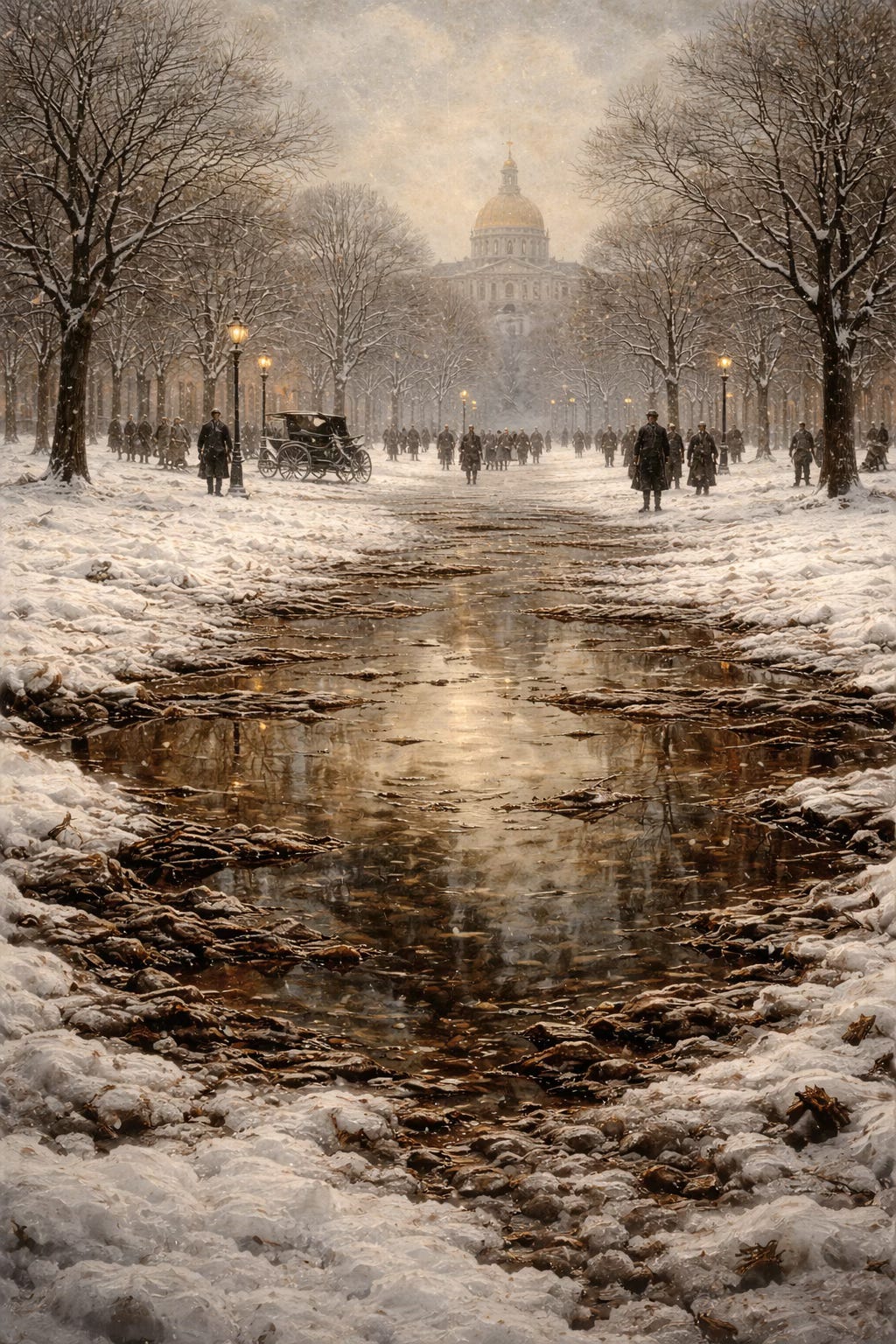
In an MA English course titled “American Authors in Performance,” last week we examined Ralph Waldo Emerson’s famous transformation into transparent eyeball. The passage recording it takes place early in his book, Nature:
Crossing a bare common, in snow puddles, at twilight, under a clouded
sky, without having in my thoughts any occurrence of special good
fortune, I have enjoyed a perfect exhilaration…Standing on the bare
ground,--my head bathed by the blithe air, and uplifted into infinite
space,--all mean egotism vanishes. I become a transparent eyeball; I am
nothing; I see all; the currents of the Universal Being circulate through
me; I am part or particle of God.
Everyone tends to focus on the amazing transfiguration into vision itself. Harold Bloom called considers this meta-metaphor central to the American literary tradition, qualifying that very little can be said about it. While we too engaged with Emerson’s curious objective reflection on his self-overcoming, we settled more upon where he stands before it happens. That snowy puddle as a point of origin struck us as the opposite of transcendence.
In addition to reflecting upon the marginals who lack the luxury of Emerson’s Oversoul, we also asked what that grounding meant for our personal experience. To this end we shoveled some sullied snow from outside our classroom (alas NYC has all too much of it this February) into a plastic container. Letting it melt at the center of our seminar circle, we then took turns standing in our private puddle. As usual we recorded our responses.
